Friday, 22 December 2017

Kaziranga National park

phpThumb_generated_thumbnailKaziranga national parkis located in the Golaghat and Nagaon districts of the state Assam. The sanctuary hosts the two third of the world’s great one horned rhinoceroses and is a world heritage site. For all those who think that one horned rhinoceros is talk of Jurassic era should visit the Kaziranga national park once. The park is spread over 430 sq kms area with swampy lagoons; elephant grass meadows and dense forests. The park has good breeding ground of wild water buffalo, elephants and swamp deer. Over the time, the population of the tigers in the park has also increased and was declared as tiger reserve in 2006.
Best time to visit Kaziranga Park
November to April is the best time to visit the Kaziranga national park and in summer you should visit it in the April to May time and in monsoon season, you should visit in the June to September months and in winter season you should visit in the November to February months.
Things to enjoy in Kaziranga national park
  1. Unlock your adventurous side and enjoy Jeep Safari- With 3 entry gates falling in different districts of Assam, the kaziranga national park has 4 zones where you can enjoy the jeep safari and can enjoy one horned rhinos along with some exotic animals and mesmerizing landscape in jeep safari.
  2. Relish the sight of unique birds- On one side, the Kaziranga national park shares its boundary with Brahmaputra River which makes it attractive place to sight different species of the birds in the park. There are numbers of water lagoons in the park which is the most favorable place to sight such birds. Whistling teal, pelican, greater adjutant stork are some of the unique birds to catch in your camera and from your eyes.
  3. Spend a night with the wild- Whenever people visit to Kaziranga national park, they have urge to stay in the close proximity of the wildlife sanctuary for authentic feeling of staying in the forest. In the night, you can enjoy birds chirping and grasshoppers stridulating. You can stay in the resorts near the park and can also find luxurious hotels near the park which are hardly 30-40 minutes drive from the entry gate.
  4. Other activities- You visit to majuli near the kaziranga national park to enjoy escape to enchanting islands, you can also admire the lovely architecture of the sibsagar which is place known for its monuments. You can also soothe yourself with visit to tea estate in Assam.

Dudhwa National Park

kazirangaDudhwa National park is a reserved and protected area in UP that stretches bahraich district and Lakhimpur kheri and comprises Dudhwa National park and kishanpur wildlife sanctuary and Katarniaghat wild life sanctuary. It comes under the sub Himalayan range and is called the terai belt.  It covers the area of 1284.3 km and has the Indo-Nepal border with its boundary and it is defined by the large mohana river. Dudhwa national park and kaziranga national park is separated by an agricultural land of 15 kms. Being tiger reserve, it became popular in the year 1977 and acquired the project tiger during 1988.
Best time to Visit Dudhwa National Park
The best time to visit Dudhwa national park is between November and May. The park remains open for general public between 15th  November to 15th June as the two month may and June are much hot to visit the park. While you are visit the park in the winter, you must remember to take woolen clothes with you as it can be much chilled between Dec. to Feb.
Activities to do in Dudhwa National Park
  1. Jungle Safari at Tiger Reserve- If you are a wildlife enthusiast, the dudhwa national park can be a great place to fulfill your adventurous activities as it is a home place of reptiles and mammals and you can get the opportunity to see the Royal Bengal tiger. Dense forest land and vast grasslands and spooky wetland you can experience only here.
  2. Birding at Dudhwa- Dudhwa national park is a home place of nine endangered birds and these are Great Indian and Indian pied hornbills, Black Crested Baza, Shaheen Falcoon, Laggar Falcon, Osprey Peafowl, Red Headed merlin, and Bengal Florican. A binocular can be greatly helpful for you’re to unobtrusive observation without disturbing the birds.
  3. Dudhwa Safari Camping- There are different camping in the tourism zone of the national park. Most of the them are near to resorts and lodges. In these peaceful and pristine surroundings, the thill of the wild makes the camping more exciting than any other thing. Some campsites are dedicated to the students of college and schools.
  4. Dudhwa forest Lodge- It is said that if you did not visit the Dudhwa Forest lodge, you trip is incomplete. It is located at the heart of the dudhwa national park in the tourism zone of the park. This park is one of the the park that allows the night stay for tourists in the wildness of the jungle.
Places to visit near Dudhwa national park
  1. Nainital
  2. Agra
  3. Almora
  4. Bhimtal
  5. Naukuchiatal
  6. Mukteshwar


Thursday, 7 December 2017

Wildlife tourism in India

Wildlife tourism in India is blessed with the rarest flora and fauna. There are about 80+ national parks, Tiger Reserves and more than 440 wildlife conservation sanctuaries in India, that provide shelter to several wild animals and birds. These wildlife conservation are situated in Indian jungle, which are the part of famous forest in India.

Wildlife Sanctuaries in India:
Wildlife Sanctuaries are the best places to roam around and above all witnessing there several wild animals is itself is and adventurous experience. Some of the famous wildlife sanctuaries in India are:

National Chambal Wildlife Sanctuary - Rajasthan, Madhya Pradesh and Uttar Pradesh
Manas Wildlife Sanctuary - Barpeta, Assam
Jaldapara Wildlife Sanctuary - West Bengal, India
Bharatpur Bird Sanctuary - Bharatpur, Rajasthan
Wayanad Wildlife Sactuary - Kerala, India
Chinnar Wildlife Sanctuary - Kerala

National Parks in India
Away from the hustle and bustle of city these parks are established in the lush green area of Indian jungle. Map of national parks in India will help you during your visit.

Kaziranga National Park - Assam
Dudhwa National Park - U.P.
Gir National Park - Gujarat
Pench National Park - Madhya Pradesh
Chitwan National Park - Indo Nepal border

Famous Wildlife Resorts in India:
Kanha Tiger Reserve - Mandala, M.P.
Corbett National Park - Uttaranchal
Ranthambore Tiger Reserve
Nagarhole Tiger Reserve
Satpura Tiger Reserve
Panna Tiger Reserve
Tadoba Tiger Reserve
Chinnar Resorts

Birds and Animals in India: In Indian jungle you may find a number of beautiful birds and wild
animals that mesmerize the visitors at the most, like peacocks in India are the most beautiful birds found anywhere in the world, while Indian camel represents the glimpse of royal Rajasthan state. But the worst part is that there are many extinct animals in India. Although the government of India has taken many fruitful steps to save these extinct species of India, yet it is incomplete without our efforts.
Endangered Species in India: When any species is left with very few numbers of its kind, and could disappear from the earth, then it is called endangered species. Indian government has taken certain applauded steps for conservation of wildlife. Some of endangered animals in India are:

Indian lion
Indian leopard
Snow leopard
Black buck
Asian white backed vulture
Asian elephant
White Bengal tigers
Indian Cobra (Black Cobra Snake)

Wildlife Adventure:
Indian wildlife tour is the hub of adventure activities, where apart from encountering the Indian wild animals and birds you may also enjoy other plenty of adventure sports and activities. In these wildlife Indian jungle provides an ideal location for trekking and safaris. Some other must do adventure activities during your wildlife tour are:

Angling and fishing
Jungle walk
Cycling
Jeep safari
Elephant safari
Horse safari
Camel safari

Thursday, 16 March 2017

Wonderful Tiger Tours In Panna Tiger Reserve

For an exciting wildlife holidays tiger safari tours will be a good opinion for all ages. India is famous for one of the wonderful Tiger tours and you will truly go ahead on the holiday of a lifetime. Tigers of India are the undeniable king of the Indian forest and, regardless of its mysterious personality, it can still be visible in the lowest point of the Indian forest.

Panna Tiger Reserve
One of the most famous tiger reserve is Panna for Tiger tours primarily because it is one of the most safe and sound and perfect reserves in India. You can find the big cat wander alone here, sometimes with the Leopard, Wild Dogs, Wolf and Hyenas. The lazy Bear can also be visible here and it can frequently be observed relaxing in the rock escarpments high above the dales. Panna tiger reserve is surrounded by many species of trees, making it prime environment for the biggest of the Indian deer, the Chital, while the Nilgai and Chinkara can be covered easily in the open fields. The large quantity of other creatures, insects and birdlife make Panna tiger reserve even more thrilling for the wildlife devotee.

The weather in Panna is usually hot and dry, which is ideal for the waterless jungle and other mixed jungles that dictate the region. There is a mixture of plants in the forest, including open fields cover with small grass, tall grasses and prickly forest; it is this assortment that is helpful to presenting the environment for so many different species. The attractive Ken River runs through the tiger reserve and is a best bird sanctuary. Specialist tourist notice more than 200 birds in the national park and most people who stay here love that amazing sightings.

Panna National Park India
There are a unit regular safaris that supply the chance to participate in night drives into the park. This offers the possibility to ascertain the Owls, Nightjars, Jungle Cats and Civets, United Nations agency all return to life once the sun has set. Daily game drives leave camp within the early morning and later within the afternoon and take you deep into the center of the reserve. Open flat-topped jeeps allow nice icon opportunities, and an skilled naturalist guide is there to produce info and decipher the simplest places for sightings.

Tours in Panna is extended to incorporate a visit to different reserves, like the far-famed Bandhavgarh, with its dense Tiger population and unbelievable ancient fort dominating its centre. You'll additionally head to the cultural capital of Asian country and pay many days in Delhi and Agra, for a really completely different and rather a lot of cultural expertise of this marvelous country.
Marissa Ellis-Snow may be a freelance nature author. If you are looking for Tiger tours, Nature trek specializes in expert-led explanation and life tours worldwide. Wildlife safari brings over twenty five years of expertise to life tours to a number of the foremost spectacular regions on Earth.

Other Tiger Reserves in India:


Tuesday, 7 March 2017

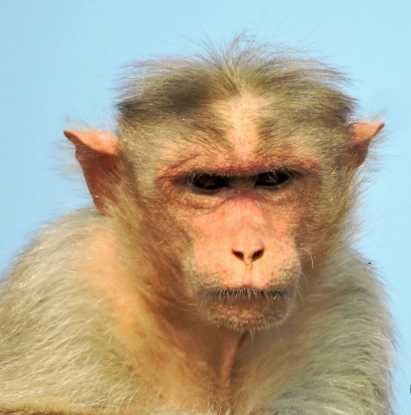
Bonnet Makak Monkey Found in Pench National Park, Officials Surprised

Sivni: The Pench National Park in the district is always kept in the headlines for something. There are wide variations in species and organisms found in this park. These days, a monkey is being found near Pench National Park, which is usually found in the south and especially in the shores of the sea and in the limited area of ​​Tapti Godavari river. This monkey is one or the other, it is a matter of search. It may also be done that if closely observed, then such species of other organisms and species can be found here, which cannot be found commonly in Madhya Bharat.

Bonnet Makak Monkey at Pench National Park

Bonnet Makak Was Found Twenty Kilometers Away

A unique monkey was seen in the past near the Bahvan Kadi river on the border of Madhya Pradesh and Maharashtra. Which is about 15-20 km from the boundary of Pench Park. This monkey is usually not found in Pench national park and Madhya Pradesh. This monkey, named Bonnet Makak, was acting like other monkeys. When investigating more about the monkey, it was discovered that it is a bonnet found in South India.

Nickname Due to Head Hairs

Awadhesh Verma, professor of biology at the excellent school, says that the distribution of Bonnet Makak is limited to the areas of Indian Ocean and Tapti-Godavari rivers filled with water. The nature of Bonnet Makak is similar to the common monkeys, but it is adapted for the South Junket's. Generally, Bonnet Makak groups live in etc. There is also the possibility that there are other partners as well. On the head of Bonnet Makak, hair is like a hat, due to which it has its name. Bonnet Makak usually sleeps in the trees near resident areas.

How The Monkey Came Here

The experts are not unanimous about how this monkey came to this area. If it is a monkey, then Shrewhran Sen, director of Pench Park, says that it is likely that this monkey has come into this area by sitting in a vehicle etc. The other possibility is that some Madari has left this monkey in this area and left it.

Wildlife photographer and expert Imran Khan says that nature has hidden a lot in itself. It is likely that in the area of ​​Pench National Park and Madhya Pradesh and such monkeys. We do not know about. Shubhrajan Sen says that this is also a possibility. There is no line on the ground that not only this particular area can be found in this limited area. As you move towards Assam, some changes can be seen in the monkeys there.

Experts are Surprised

Whatever the truth, however, the presence of this monkey in this area has generated a curiosity for the experts. It may also be that in the days to come, see a new species of monkeys from the pancake monkeys and bonnet maakak relations. The viewing of Bonnet Makak in the area has increased the need for research.

Other National Parks in India


Kaziranga National Park Battles the Worst Flood of the Decade

270 animals are dead, including 20 one-horned rhinos, and others are at risk of being parched

Kaziranga National Park
“Until now, 270 animals have died, including 20 one-horned rhinos, of which 17 drowned and three died of old age as they could not cope with the rising flood waters. The biggest casualty is the hog deer whose toll has risen to 185,” said Satyendra Singh, director of kaziranga national park over phone. Among the dead rhinos are eight calves, including four female calves. Nine rhinos have been rescued by park officials, of which eight are undergoing treatment.

About 70 per cent of the national park is submerged and the officials will be able to assess the damage once the water recedes. “Most of the park is inaccessible due to slushy mud and neck-deep water. Once the water recedes, we will be able to access the damage,” Singh added.

Wildlife conservationists though are worried about the safety of the rhinos as many of them have strayed outside the park’s boundary in search of food and high ground. “Once the animals are outside the perimeter of the park, they are at a high risk of being poached and they may also pose a threat to the people as some were already seen on the national highway,” said Bishal Gogoi, a wildlife conservationist in Guwahati.

The threat of poaching is very real as one rhino horn fetches close to Rs8 to Rs10 million (Dh440,180-Dh550,270), and can be easily sent outside India through the porous Nagaland border. Last year 17 rhinos were poached. This year the figure has already reached 12.

The biggest concern for officials though is that people living on the outskirts of the park and considered as the first line of defence against poaching had to abandon their homes due to floods.
Kaziranga National Park, a Unesco World Heritage site, is home to 35 species of mammals and has 2,400 one-horned rhinoceros, 20,000 hog deer, 100 tigers, 1,000 elephants, 1,500 wild buffalo, and 1,000 swamp deer.

“We committed to preserve the wildlife of our state and we are doing all that is possible. Additional resources have been sent to the area and one of my cabinet ministers is monitoring the situation round the clock,” Assam chief minister Sarbananda Sonowal said.

The human toll has increased to 32 even though the flood waters have started to recede in various areas. “The situation has slightly improved and if we do not get rain in the next few days the number of people affected by the floods will fall drastically,” Sonowal added.

However, for the chief minister and his newly appointed government the challenge is to redevelop everything from scratch as most of the houses in rural Assam have been destroyed. “Millions of people have been left homeless and the challenge for the government is to ensure basic housing for them at the earliest,” said Subir Pathak, a well-known activist in the state.

Friday, 3 March 2017

Wonderful Tiger Tours In Panna Tiger Reserve India

Tiger tours make for a thrilling wildlife holiday for enthusiasts of all ages. Travel to India on one of the fabulous Tiger tours and you will truly be embarking on the holiday of a lifetime. This beautiful creature is the undisputed king of the Indian jungle and, despite its elusive nature, it can still be sighted in the depths of the Indian jungle.


Panna is a popular destination for Tiger tours primarily because it is one of the most untouched and unspoiled reserves in the country. The big cat roams freely here, along with the Leopard, Wild Dog, Wolf and Hyena. The Sloth Bear also makes its home here and it can often be seen lazing in the rock escarpments high above the valleys. Much of the reserve is wooded, making it prime habitation for the largest of the Indian deer, the Chital, while the Nilgai and Chinkara can be spotted easily in the open grasslands. The abundance of other mammals, reptiles and birdlife make Tiger tours in Panna even more exciting for the wildlife enthusiast.

Panna Tiger Reserve
Panna has a climate that is usually hot and dry, which is perfect for the dry teak forest and other mixed forests that dominate the area. There is a variety of vegetation in the park, including open grasslands, tall grasses and thorny woodland; it is this diversity that is conducive to providing the habitat for so many different animals. The beautiful Ken River runs through the park and is a haven for birdlife. In fact, more than 200 birds have been recorded in the reserve and most people who visit are treated to some wonderful sightings.

There are regular safaris that offer the opportunity to participate in night drives into the park. This offers the chance to see the Owls, Nightjars, Jungle Cats and Civets, who all come to life once the sun has set. Daily game drives leave camp in the early morning and later in the afternoon and take you deep into the heart of the reserve. Open topped jeeps allow for great photo opportunities, and an expert naturalist guide is there to provide information and decipher the best places for sightings.

Panna Tiger Reserve India
Tours in Panna can be extended to include a visit to other reserves, such as the famous Bandhavgarh, with its dense Tiger population and incredible ancient fort dominating its center. You can also head to the cultural capital of India and spend a few days in Delhi and Agra, for a very different and rather more cultural experience of this marvellous country.